 Warner Bros. PicturesSave this storySave this story
In The Scenario, reporter Kirbie Johnson goes behind the scenes of the buzziest movies and TV shows to reveal how the best wigs, special-effects makeup, and more are created. For this edition, Johnson spoke with Kim Santantonio and Angela Levin, Nicole Kidman’s personal hairstylist and makeup artist, as well as Janine Thompson and Whitney James, Sandra Bullock’s personal hairstylist and makeup artist, about re-creating the iconic beauty of Gillian and Sally Owens for Practical Magic 2, nearly three decades after the original film. As you may expect, spoilers ahead.
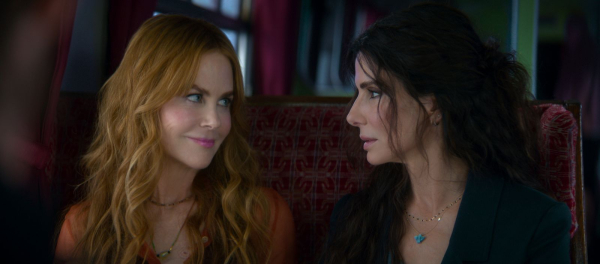
I’m not the only one who was brought to tears by Practical Magic 2. (I cried twice during the press screening and premiere.) Hairstylist Janine Thompson, who worked with Sandra Bullock on the original film 28 years ago and returned for round two, admits she was overwhelmed with emotion when she returned to set last year.
“I couldn't help it. I just started to cry,” says Thompson. “You’re remembering things in your life from that time period, right? I found out I was pregnant with my first baby when I worked on [the original film], and when I walked back into that dining room, it all came back…they put that house back together like it had never been gone. It was amazing.”
 Warner Bros. Pictures
Some of Thompson’s personal nostalgia made its way into Practical Magic 2, incorporating hair accessories from the original movie into the second one. “In the sequel, [Bullock] wears one in the cemetery scene,” she explains. “I brought a huge box of them and gave them to the [hair department head] for the sequel, and she snuck them in, in different places.”
It’s a film about sisterhood and, of course, magic. And there was plenty of the latter to take in. We spoke to Thompson and Whitney James, Bullock’s personal makeup artist, as well as Nicole Kidman’s team, Kim Santantonio and Angela Levin, about how they reimagined the beauty of the Owens sisters nearly three decades later, from de-aging special effects to the sorcery of a good wig.
Nicole Kidman’s Wig Is Not the Same Color—Intentionally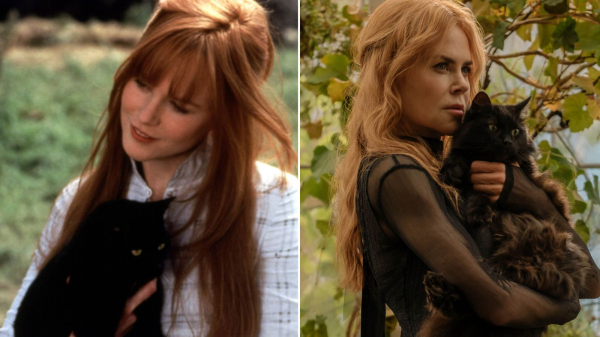
Kidman’s wig in Practical Magic (1998) versus Practical Magic 2 (2026), which features more volume, texture, and highlights.
Everett Collection / Warner Bros. Pictures
Kidman’s love of wigs is well-known in the industry. But when the original film debuted, viewers were shocked to learn she wore an auburn-and-copper-colored wig to play Gilly Owens. People largely thought it was her own hair at the time.
To bring Gilly into the 2020s, Kidman’s longtime on-set hairstylist, Kim Santantonio, updated both the cut and color, bringing wigmaker Rob Pickens onboard to help. “He does all of her wigs, and luckily he was able to come to the trailer and show her samples,” says Santantonio.
Despite having the original wig in their possession, Kidman’s new wigs—she had two, one for backup—didn’t match the OG because the team intentionally added layers and texture to give her hair more movement. “The first wig was very straight, like we flatironed it,” says Santantonio. “It felt heavy [and looked] all one length. This time around, [Kidman] was moving her head a lot, wanting a lot of movement, flickering and flying, so when I put [the new wig] on her the first time, we razor-cut into it around her face, creating a lot of layers.” To style the wig, Santantonio first went in with a curling iron to add volume, then used a flatiron to straighten parts of it, creating a “rock and roll” effect. “In the first film, she had that edge to her,” Santantonio explains.
When it came to the color of the original wig, the shade was very flat, according to Santantonio. “There was no color variation. So when Rob made [the wig for the second film], we had highlights and beautiful color through it because natural hair has a highlight in it.”
A major factor in Kidman’s hair-color change is that in the nearly three decades since Practical Magic debuted, filmmaking has come a long way. “When they shot the first one, the camera and the stock were so different than they are today,” says Angela Levin, Kidman’s makeup artist. “Throughout the years, everything changed: the way it's been lit, the colors, like Kim said, the highlights and the lowlights [in the hair] became crucial because the camera will pick it up.” According to Levin, if you take the wig and the film they used in 1998, it looks amazing. If you put that same wig on camera today, it would look totally different because we’re able to see more of the details, and it would not look as realistic.
Sanda Bullock’s Hair Tells Sally’s Story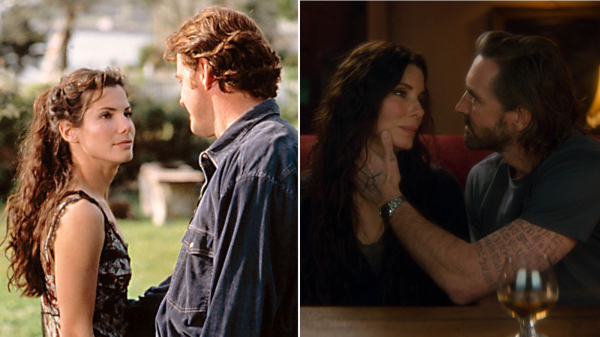
In Practical Magic 2 (right), Bullock’s hair is more styled and restricted, versus the original film (left), where it’s more relaxed and free.
Everett Collection / Warner Bros. Pictures
Since we last saw Sally, she’s lost another husband. Gary is a victim of the Owens family curse, and Sally has made Gilly promise not to reveal to her daughters that they are witches. Sally’s hair, normally swept back into a loose half-up style or relaxed braids, is noticeably more coiffed and pulled back than in the original film.
“Sally’s had a really rough go of it, and she’s very conservative and very tight because of all the horrible things she’s been through,” Thompson explains. “Her hair is pulled back because she wants to control everything, but Sally isn’t really in control. So pieces are falling out. We very specifically pulled those pieces out to make it look like she can't fight who she is.”
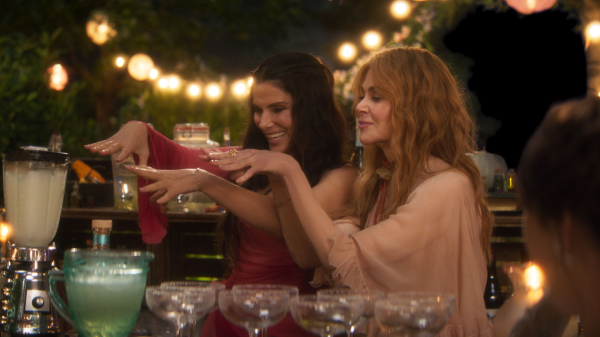
Sally keeps this guarded aesthetic throughout the film, but once the curse is broken, she lets loose with some midnight margaritas at her daughter Kylie’s wedding, evoking a more laid-back, brighter Sally.
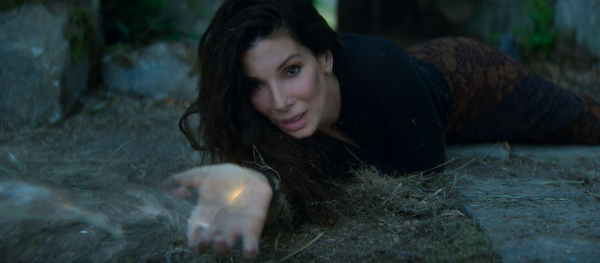
Sally has had a really rough go of it since the original film.
Warner Bros. Pictures
“Sandy and I had a conversation about her look for the end of the film and wanting to show that Sally had calmed down,” says Thompson. “The curls have relaxed because she finally gets to a peaceful place. We wanted to show that she hasn’t just embraced it—she’s taken control of it.”
To create Sally’s signature curls in the sequel, Thompson relied on LolaVie, the brand launched by one of Bullock’s close friends, Jennifer Aniston. “It’s the only thing I’ve ever used on Sandy that’s worked this well on her hair,” says Thompson. She used a concoction of three products to create the “effortless” look, starting with the Leave-In Spray and the Detangler, which Thompson said she used “gobs” of on Bullock’s wet hair. “We let it dry overnight and put the LolaVie oil all through it [the next day] to break up the curls.” Once air-dried, she used both a half-inch and a one-inch curling iron to add curls for continuity.
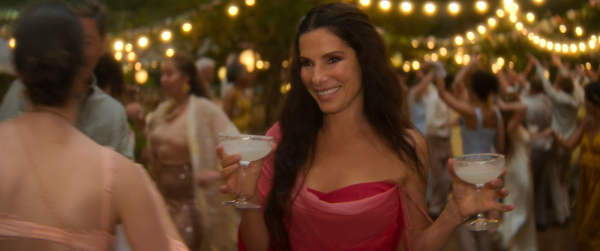
Bullock, as Sally, let’s loose at her daughter’s wedding. Her loose waves reflect that.
Warner Bros. PicturesThe FX Magic Employed During That Flashback Scene
At the top of the film, there’s a short flashback to when Gary passes away, and we see Sally and Gilly around the time the first movie was filmed, employing the use of de-aging technology to take Bullock and Kidman back to their early 30s. Whitney James, Bullock’s makeup artist, said for that scene they couldn’t rely on digital filters alone, keeping the makeup clean and minimal given Sally’s emotional state (and to complement the AI technology).
In the first film, James says Sally’s brows were thinner, and she had a “fresher, more flushed cheek” versus the more chiseled features she has in the current day, which she emulated through makeup for the flashback scene. She also wears eyeliner on her lower lash line, which was part of Bullock’s look from the first film. “[I was] looking at the pictures from then and getting as close as we could [to the original], still making her look good, and then being able to de-age. It was a balancing act in all ways.”
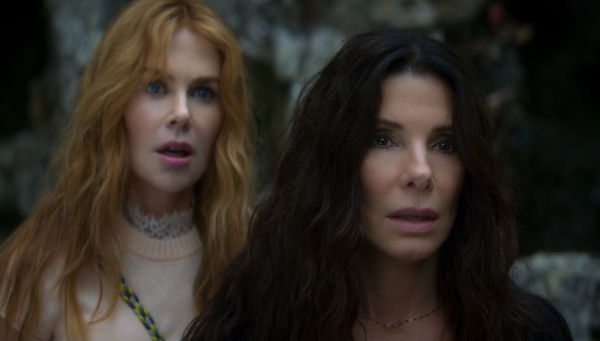
For the sequel, Kidman and Bullock’s makeup shifted from the first film.
Warner Bros. PicturesGilly’s Enchanting Makeup
If Bullock has a more natural, matte makeup look in the sequel, Kidman’s vibe is more whimsical and luminous to juxtapose the personalities of the sisters. “The character already existed, so we did have to allow the audience to see the girl that they knew from the first film,” says Levin. “But I wanted to add a little sparkle,” normally a no-no on camera, but something that a story about witches would allow for.
“When you do movies, you don't really use anything sparkly because the camera tends to pick it up tenfold, and sometimes it's not very realistic,” Levin explains. “But in this case, because the movie is not very realistic, I wanted to add something that’s not your everyday routine.”
Levin didn’t use dark eye shadow shades, instead focusing on beige and gold tones with a subtle shimmer. The blush she used, which received many compliments on set, was “transparent” and gave a dewy look to the skin. “It didn't look like something that was applied; it looked like something that came from within,” adds Levin, who broke out Dior Beauty’s Rosy Glow Radiance pH-Activated Blush Stick in Pink Lilac for the job.
Levin also dipped into cool tones of lilacs, lavenders, and grays. “Those are all colors that really complement [Nicole’s] eyes and her skin tone,” she says, giving a shout-out to the Lisa Eldridge’s Betty Eyeshadow palette she used on set. “I could have gone with browns, but that wouldn't have been the mystical, good witch kind of girl. Every [traditional film makeup] rule was something I ignored because I just wanted to evoke that mystical feeling.”